The Significance of Zijin Mining's Establishment of a Captive Insurance Company in Singapore and Its Lessons for China's Manufacturing Industry
Core viewpoint: In 2023, Zijin Mining established a wholly-owned captive insurance company (ZIJIN MINING INSURANCE (SINGAPORE) PTE. LTD.) in Singapore, marking the upgrading of this global mining giant's risk management from "passively purchasing commercial insurance" to "proactively building a captive platform". This practice not only provides customized risk protection for Zijin Mining's mining projects in 17 countries around the world, but also has important reference significance for the large number of Chinese manufacturing enterprises that are "going global"——against the background of insufficient coverage and high costs in the traditional commercial insurance market, building corporate captive platforms with the help of mature captive centers such as Hong Kong and Singapore is a feasible path for Chinese manufacturing to enhance risk resilience and reduce overall costs in the course of globalization.
01 Background: Zijin Mining's Globalization and Risk Management Needs
1.1 Overview of Zijin Mining's Global Layout
Zijin Mining Group Co., Ltd. is a large multinational mining group mainly engaged in the exploration and development of metal mineral resources, with the Finance Bureau of Shanghang County, Fujian Province as its actual controller. After three major strategic upgrades (development of the low-grade gold and copper mine at Zijinshan→nationwide expansion→global layout), the company has grown into an international mining giant ranking among the top five in global gold output and the top ten in copper output.
-
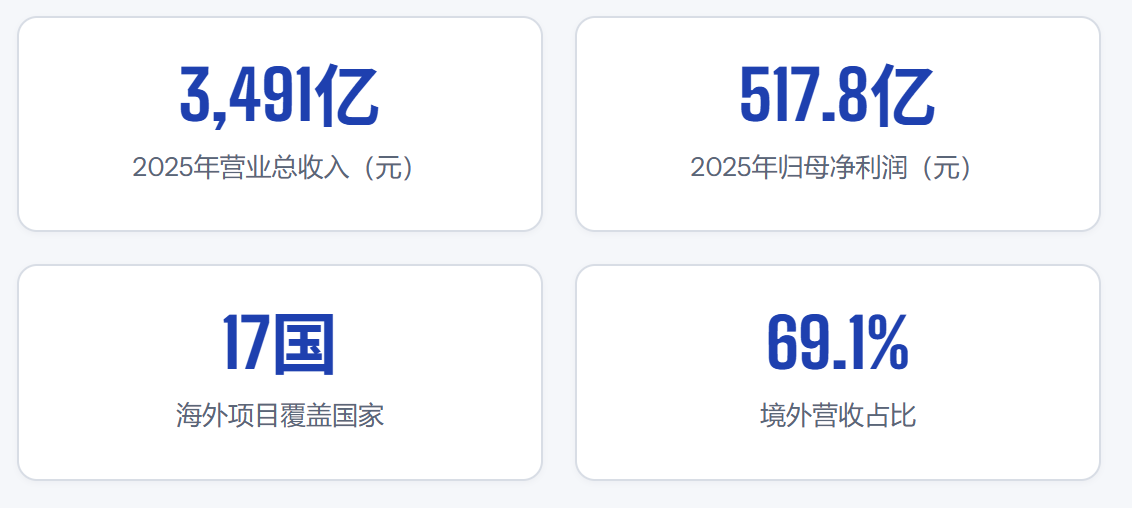
Total operating revenue in 2025RMB 349.1 billion yuan
-
Net profit attributable to the parent company in 2025RMB 51.78 billion yuan
-
Overseas projects covering17 countries
-
Proportion of overseas revenue69.1%
1.2 Scale of Overseas Risk Exposure
As of the end of 2025, Zijin Mining's total overseas assets stood at approximately RMB 220 billion, accounting for about 43% of the group's total assets; overseas operating revenue was RMB 241.2 billion, accounting for 69.1% of total revenue; and overseas profits contributed nearly 60%. Overseas business has become the core growth engine of the group's profits, but at the same time it means an enormous cross-border risk exposure.
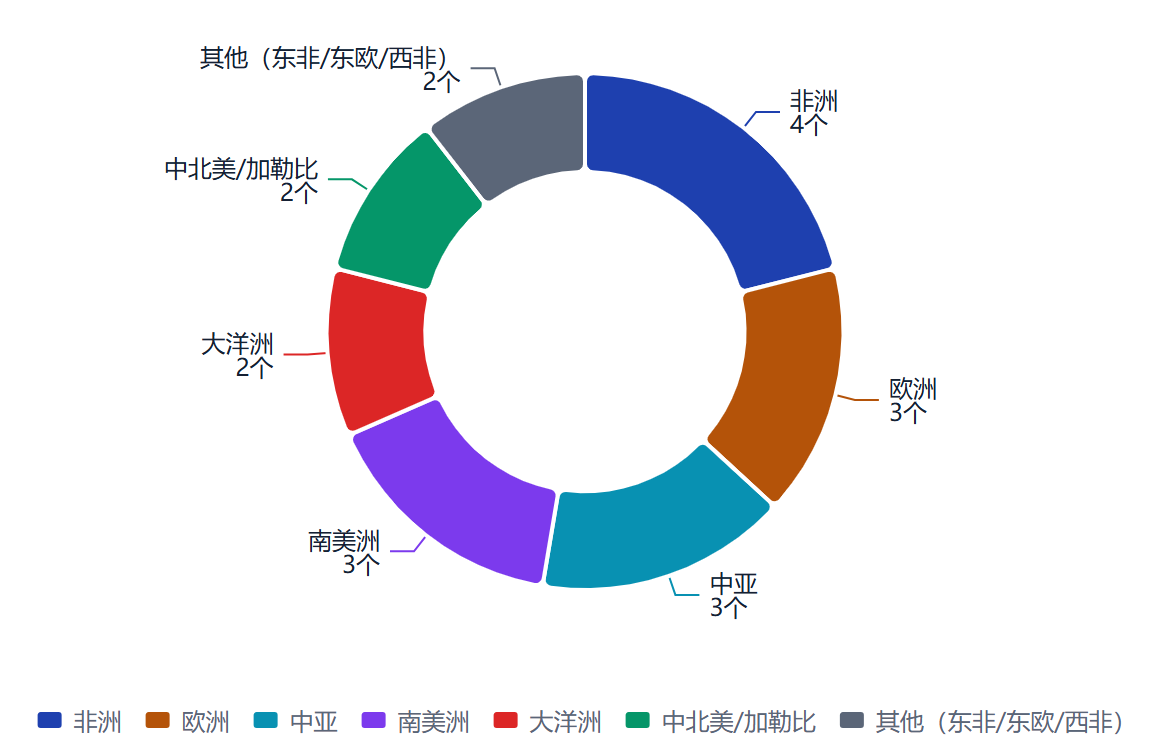
Figure 1: Regional Distribution of Zijin Mining's Overseas Mining Projects
1.3 Core Risk Types Facing the Mining Industry
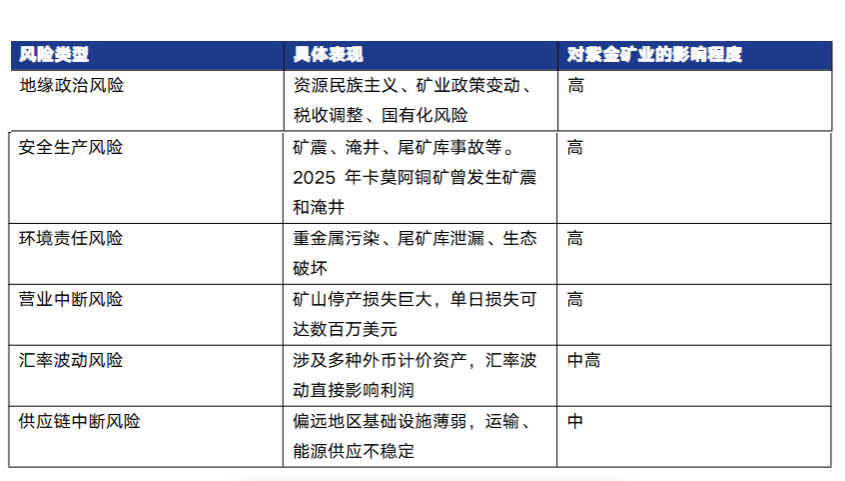
| Risk type | Specific manifestation | Degree of impact on Zijin Mining |
| Geopolitical risk | Resource nationalism, changes in mining policy, tax adjustments, nationalization risk | High |
| Work safety risk | Mine-induced seismic events, mine flooding, tailings dam accidents, etc. In 2025, the Kamoa copper mine experienced mine-induced seismic events and flooding | High |
| Environmental liability risk | Heavy metal pollution, tailings dam leakage, ecological damage | High |
| Business interruption risk | Losses from a mine shutdown are enormous, with single-day losses reaching millions of US dollars | High |
| Exchange rate fluctuation risk | Assets are denominated in various foreign currencies, and exchange rate fluctuations directly affect profits | Medium-high |
| Supply chain interruption risk | Infrastructure in remote areas is weak, and transportation and energy supply are unstable | Medium |
1.4 The "Protection Gap" in the Commercial Insurance Market
According to Marsh data, mining companies can recover only 45%–55% of their losses through commercial insurance, far below the 75% for the renewable energy industry. For mining-specific risks such as environmental liability insurance, business interruption insurance and tailings dam risk, commercial insurers have a low willingness to underwrite and charge high premiums, resulting in a significant market failure.
02 Basic Information on Zijin Mining Insurance (Singapore)
2.1 Basic Company Information
| Item | Details |
| Full company name | ZIJIN MINING INSURANCE (SINGAPORE) PTE. LTD. |
| Name in Chinese | Zijin Mining Insurance (Singapore) Private Limited |
| UEN registration number | 202335175N |
| Date of establishment | 2023 |
| Parent company | Zijin Mining Group Co., Ltd. (wholly-owned subsidiary) |
| Actual controller | Finance Bureau of Shanghang County, Fujian Province |
| License type | Captive Insurer (General) — captive insurance company (general insurance) |
| Regulator | Monetary Authority of Singapore (MAS) |
| Manager | Aon Insurance Managers (Singapore) Pte. Ltd. (Aon) |
| Chief Executive Officer | George Ong Chee Soon |
| Registered capital | USD 2 million (approximately RMB 14 million) |
2.2 Clarification of the Relationship with the Domestic "Zijin Insurance"
The two "Zijin" insurers have no connection whatsoever
The domestic Zking Insurance Co., Ltd. (Zijin Property Insurance) is a Jiangsu provincial state-owned financial enterprise, with the Jiangsu Provincial People's Government as its actual controller; it sells property insurance products to the general public and has not established any institutions overseas. Zijin Mining Insurance (Singapore), by contrast, is a wholly-owned captive subsidiary of Zijin Mining Group and only underwrites risks within the group. Apart from both containing the two characters "Zijin" in their names, there is no equity, business or management relationship between them.
2.3 Business Boundaries of the Captive Insurance Company
According to the regulatory definition of captive insurers by the Monetary Authority of Singapore, the business scope of Zijin Mining Insurance (Singapore) is strictly limited to underwriting the risks of Zijin Mining Group and its affiliated enterprises, and it may not sell insurance products to the general public or to third parties. In essence, it is a risk financing and risk management tool within the corporate group.
03 Background of Establishment and Analysis of Motivations
Zijin Mining's choice to establish a captive insurance company in Singapore in 2023 was the inevitable result of the convergence of three factors: industry, enterprise and policy.
3.1 Industry Motivation: The "Market Failure" of Mining Risk Protection
Mining is a typical high-risk, high-investment and long-cycle industry. The traditional commercial insurance market has systematic gaps in mining risk protection: insufficient scope of coverage (covering only 45%–55% of losses), expensive premiums (rates for special lines such as environmental liability insurance remain high), and missing products (risks such as tailings dams and geological disasters are almost uninsurable), while during "hard market" cycles premiums soar and coverage shrinks. Major global mining companies (BHP, Rio Tinto, Glencore, etc.) generally have captive insurance companies, which has become a standard configuration for international mining giants.
3.2 Enterprise Motivation: Upgrading Risk Management in a Period of Accelerated Globalization
Around 2023, Zijin Mining was in a stage of accelerated expansion of its global layout: overseas assets exceeded 40% of the total, overseas profits contributed more than 60%, and overseas projects covered more than 15 countries. At that time, the group's insurance arrangements still mainly relied on decentralized purchases of commercial insurance, lacking a unified platform for risk transfer and management, and could not effectively cope with complex cross-border, cross-currency and cross-jurisdictional risks.
3.3 Policy Motivation: A Mature Captive Ecosystem in Singapore
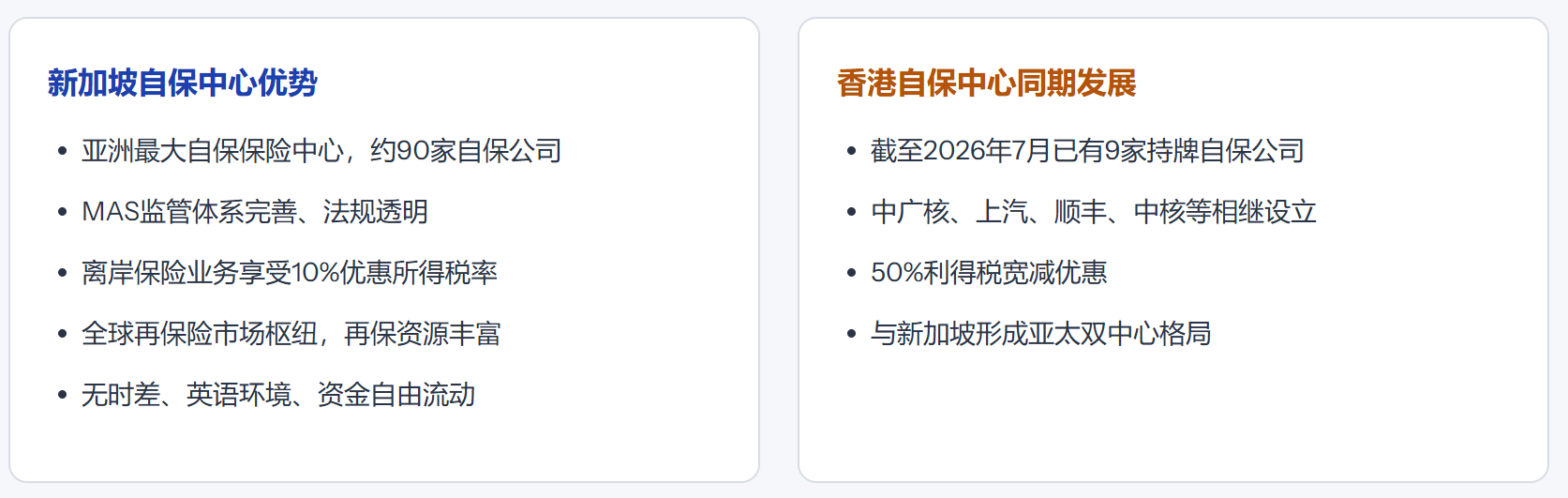
Previously, Zijin Mining already had a certain investment base in Singapore, having established Zijin (Singapore) International Capital Co., Ltd. there as an overseas investment and financing platform, with a local operating base and bank-enterprise relationships (it has credit facilities with Bank of China Singapore Branch, CCB Singapore Branch, OCBC and others). This laid the foundation for the establishment of Zijin Insurance (Singapore).
04 Management Model and Operating Structure
Zijin's Singapore captive adopts the typical model of "wholly-owned captive + professional third-party management", with Aon providing full-process operating services.
4.1 Governance Structure
Figure 2: Governance and Operating Structure of Zijin Mining Insurance (Singapore)
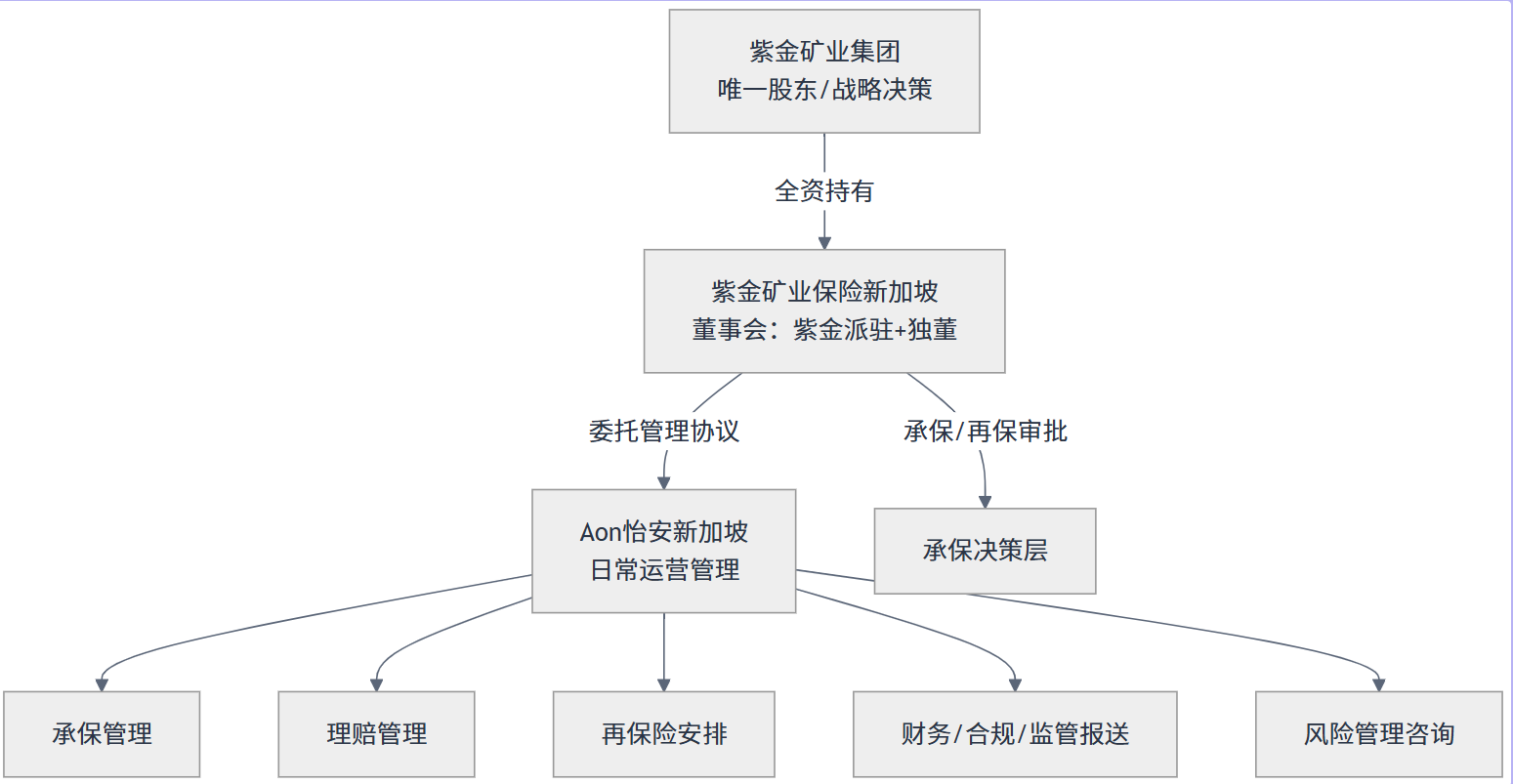
4.2 Management Services Provided by Aon
| Service module | Specific content |
| Underwriting management | Policy issuance, premium pricing, policy wording design, risk assessment |
| Claims management | Claims intake, on-site survey and loss adjustment, claims payment, handling of claims disputes |
| Reinsurance arrangement | Reinsurance program design, quotation and negotiation, contract management, reinsurance claims recovery |
| Financial management | Accounting, financial statements, fund management, investment management |
| Compliance and supervision | MAS regulatory reporting, license maintenance, compliance audits |
| Risk management consulting | Loss data analysis, risk improvement recommendations, industry benchmarking |
4.3 Layered Decision-Making Mechanism
Strategic level (Zijin Mining Group / Board of Directors): setting of risk appetite, additional capital injection, adjustment of retention ratios, approval of major reinsurance programs
Operating level (Aon management team + Zijin Mining risk/finance departments): day-to-day underwriting, claims handling, routine reinsurance renewals
Execution level (Aon Singapore team): policy issuance, claims payment, regulatory reporting and other specific operations
Note: "Wholly-owned captive + third-party professional management" is the most mainstream operating model among Singapore's approximately 90 captive insurance companies. This model not only ensures the parent company's control over risk strategy, but also leverages the operating capabilities of professional captive management companies to meet regulatory requirements, reducing the cost of building an in-house team.
05 Risk Retention and Underwriting Business Structure
As the individual financial data of captive insurers in Singapore is not publicly disclosed, the following analysis is a systematic deduction based on industry standard models, Aon's captive management framework and mining industry benchmarks.
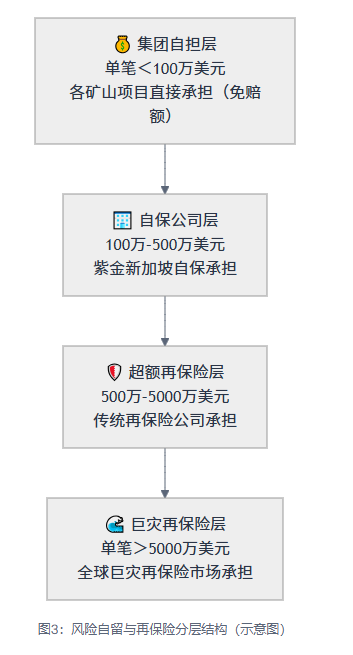
5.1 Layered Risk Assumption System
The core design of a captive insurance company is to assume risks in layers, rather than to "assume everything itself". With reference to the common structure of global mining captives and the "60% captive + 40% commercial" model of PetroChina, the risk retention structure of Zijin's Singapore captive can be roughly inferred as follows:
Figure 3: Layered Structure of Risk Retention and Reinsurance (Illustrative)
5.2 Estimation of Key Parameters
| Parameter | Estimated value | Notes |
| Retention per single risk unit | USD 5–20 million | Mining assets are of high value, so the retention is correspondingly higher |
| Annual retained premium ratio | 30%–50% | 30%–50% of gross premiums is retained in the captive |
| Proportion of group risks covered by the captive | About 40%–60% | With reference to the PetroChina model |
| Deductible per incident | USD 0.1–1 million | Adjusted according to the line of business and the project |
| Target combined operating ratio (COR) | 75%–90% | Lower than commercial insurers (no sales expenses) |
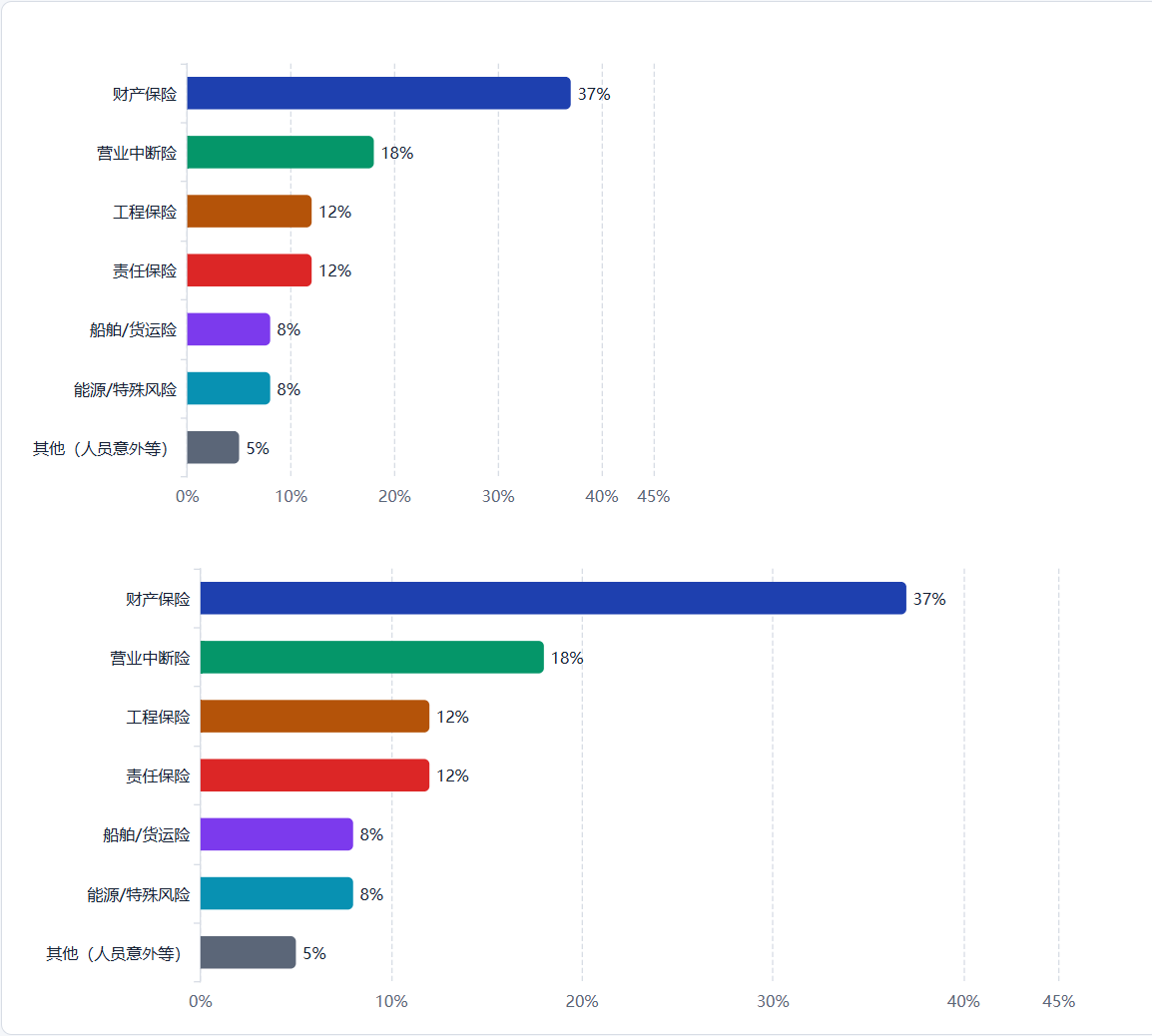
5.3 Estimation of the Underwriting Business Structure
Figure 4: Line-of-Business Structure of Underwriting at Zijin Mining Insurance (Singapore) (Estimated)
5.4 Estimation of Premium Volume and Profitability

Note on data limitations: the above figures are all reasonable estimates based on industry benchmarks. The Monetary Authority of Singapore exempts captive insurers from public disclosure of financial data, and the actual premium, profit and other data of Zijin Mining Insurance (Singapore) have not been made public.
06 Strategic Significance for Zijin Mining Group
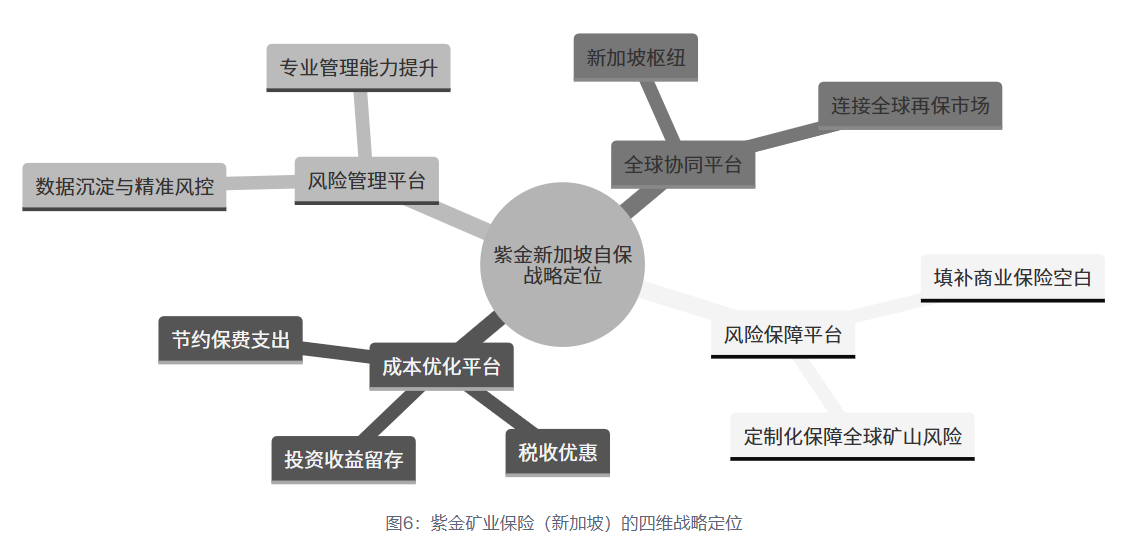
A captive insurance company is not simply a "substitute for buying insurance", but the core infrastructure of Zijin Mining's global risk management system.
6.1 Six Core Values
| Value dimension | Specific manifestation |
| Reducing overall insurance costs | Saving the insurer's profit margin (10%–20% of premiums) and intermediary fees, enjoying Singapore's preferential tax rate of 10%, and obtaining better pricing through centralized reinsurance purchasing |
| Filling coverage gaps | Underwriting risks that the commercial insurance market is unwilling or unable to cover, such as tailings dam environmental liability, business interruption and geopolitical risk |
| Enhancing risk management professionalism | Accumulating group-wide risk loss data, achieving precise pricing and risk early warning, and forming a data-driven risk control loop |
| Stabilizing risk financing costs | Smoothing the fluctuations of the "soft and hard cycles" of the insurance market, and stabilizing costs by adjusting the retention ratio during hard cycles of commercial insurance |
| Capital retention and investment income | Premiums are retained within the group and investment income belongs to the group, keeping the benefits in-house |
| Serving the globalization strategy | The Singapore hub connects the global reinsurance market with Zijin Mining's mining projects in 17 countries, enhancing its image in the international capital market |
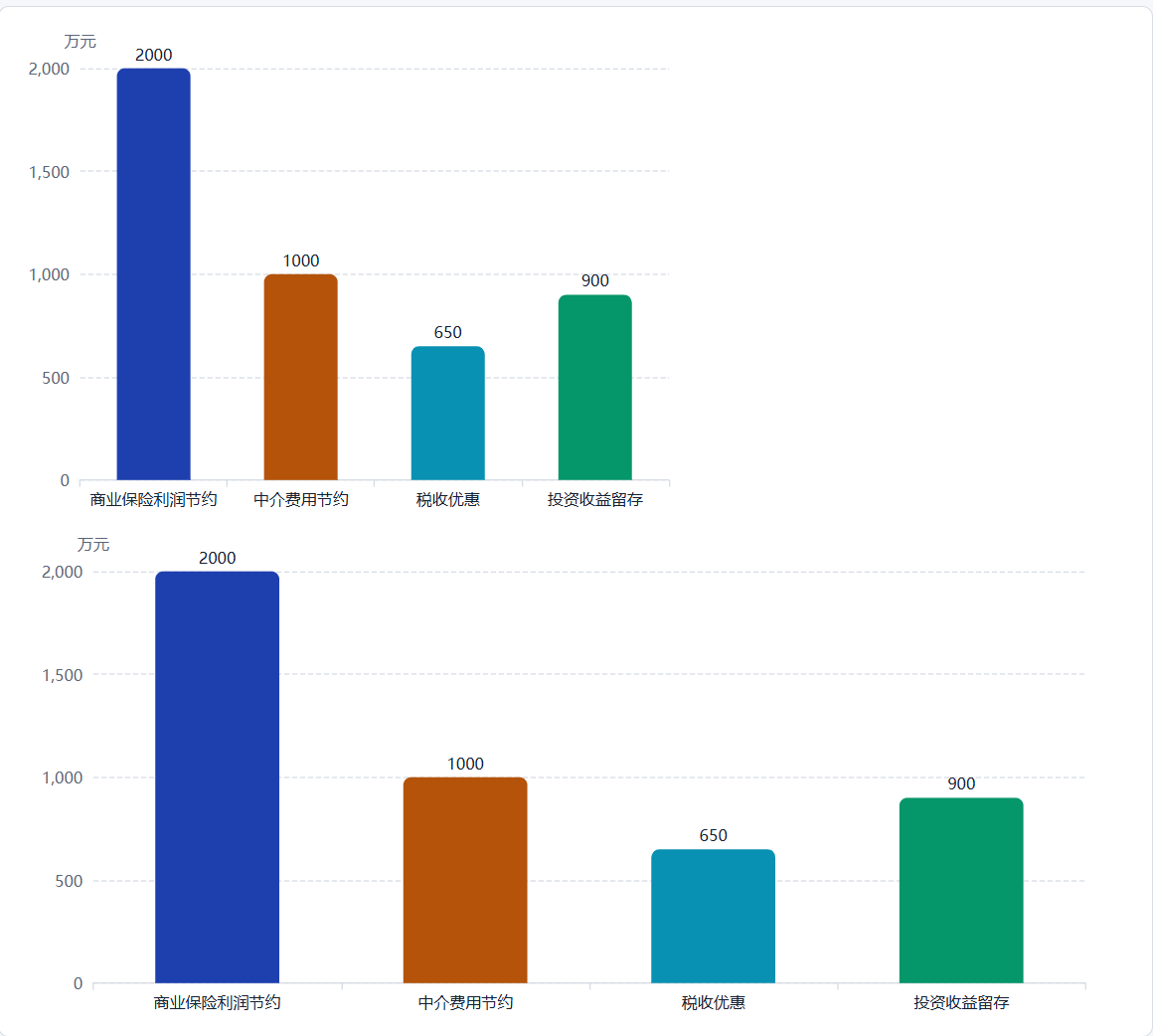
6.2 Estimation of Comprehensive Value Creation
Figure 5: Estimated Annual Comprehensive Value Created by the Captive for the Group (RMB 10,000)
6.3 Summary of Strategic Positioning
Figure 6: Four-Dimensional Strategic Positioning of Zijin Mining Insurance (Singapore)
07 Lessons for China's Manufacturing Industry
Zijin Mining's practice provides a replicable risk management paradigm for the large number of Chinese manufacturing enterprises that are "going global".
7.1 The Risk Dilemma of Chinese Manufacturing "Going Global"
With the in-depth advancement of the Belt and Road Initiative, the scale of overseas investment by Chinese manufacturing enterprises has continued to expand. In 2024, China's outward foreign direct investment flows reached USD 181.2 billion, of which the share of manufacturing continued to rise. However, a large number of manufacturing enterprises going global still face dilemmas in risk management similar to those Zijin Mining faced before it established its captive:
Insufficient availability of coverage: overseas projects face special risks such as political, security and environmental risks; domestic insurers have limited overseas underwriting capacity, and international insurers hold cognitive biases against Chinese enterprises
High cost of coverage: the international insurance market prices Chinese enterprises on the high side, with premiums for some lines 30%–50% higher than those of international peers
Fragmented risk management: each overseas subsidiary purchases insurance on its own, lacking coordination at the group level, which results in weak bargaining power and difficulty in accumulating data
Lagging claims service: long cross-border claims processes, language barriers and legal differences lead to low claims efficiency
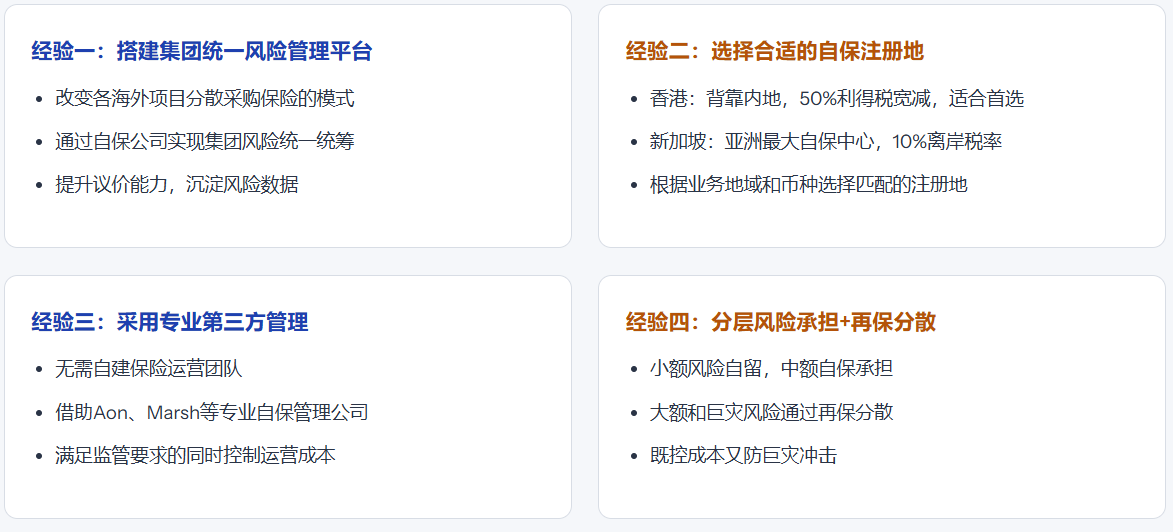
7.2 Core Experience Worth Learning From
7.3 Types of Manufacturing Enterprises Suitable for Establishing a Captive Insurance Company
| Enterprise type | Representative industries | Suitability for establishing a captive |
| Large resource and energy enterprises | Mining, oil, power | ★★★★★ Most suitable, with large and concentrated risk exposure |
| Large equipment manufacturing enterprises | Construction machinery, power equipment, rail transit | ★★★★☆ Many overseas projects and high product liability risk |
| Large construction enterprises | Building construction, engineering contracting | ★★★★☆ Strong demand for construction insurance and high project risk |
| Large automobile manufacturing enterprises | Complete vehicles and parts | ★★★☆☆ Product liability and supply chain interruption risk |
| Large chemical enterprises | Petrochemicals, fine chemicals | ★★★★☆ High environmental liability risk and large coverage gaps |
| Large logistics enterprises | Express delivery, shipping | ★★★☆☆ Vehicle and vessel risks, suitable for captive insurance |
| Small and medium-sized manufacturing enterprises | Various sub-sectors | ★★☆☆☆ Diseconomies of scale; group captives may be considered |
7.4 Reference to Typical Cases
In addition to Zijin Mining, a number of large Chinese enterprises have established captive insurance companies in Hong Kong, which can provide direct references for manufacturing enterprises:
| Captive insurance company | Parent company | Industry | Location of establishment |
| Sinopec Insurance Company Limited | Sinopec | Energy | Hong Kong |
| CNOOC Insurance Company Limited | CNOOC | Energy | Hong Kong |
| CGN Insurance Company Limited | CGN Group | Energy/Nuclear power | Hong Kong |
| Shanghai Electric Insurance Company Limited | Shanghai Electric Group | Equipment manufacturing | Hong Kong |
| SAIC Insurance Company Limited | SAIC Group | Automobile manufacturing | Hong Kong |
| CNNC Insurance Company Limited | China National Nuclear Corporation | Nuclear energy | Hong Kong |
| SF Insurance Company Limited | SF Holding | Logistics | Hong Kong |
| Zijin Mining Insurance Singapore | Zijin Mining Group | Mining | Singapore |
Among them, the captive practices of manufacturing enterprises such as Shanghai Electric and SAIC Group have the most direct reference value for other manufacturing enterprises. SF Express, as the first private captive insurance company in the mainland, also provides a model for private manufacturing enterprises.
08 Policy Recommendations and Promotion Path
Recommendations are put forward at the three levels of enterprise, regulation and policy to promote the captive insurance model in serving the "going global" of the manufacturing industry.
8.1 Recommendations for Manufacturing Enterprises
Conduct a risk exposure assessment: systematically review the risk types, scale and geographic distribution of the group's global business, and determine whether the economic scale threshold for establishing a captive is met (it is generally recommended that annual premium expenditure reach RMB 100 million or more)
Give priority to Hong Kong as the starting location: Hong Kong has a mature captive ecosystem, is backed by the mainland and offers a 50% profits tax concession, with low communication costs, making it the preferred testing ground for Chinese enterprises to establish captive insurance companies
Adopt a "small steps, fast progress" strategy: initially include some lines (such as property insurance and liability insurance) in the captive, and gradually expand the scope of business after accumulating experience and data
Draw on professional captive management companies: initially entrust international professional institutions such as Aon, Marsh and WTW or large domestic insurance brokers with management, and consider building an in-house team once conditions mature
Establish a group risk data platform: uniformly collect and analyze the loss data of each business unit to provide a basis for captive actuarial pricing
8.2 Implications for China's Captive Insurance Regulation
Improve the domestic regulatory framework for captive insurance companies: there are currently only 4 captive insurance companies in the mainland, and the regulatory rules need to be optimized; it is recommended to further clarify the business scope, capital requirements and reinsurance rules for captive insurers
Support the development of Hong Kong as a captive center: encourage mainland enterprises to establish captive insurance companies in Hong Kong, and provide facilitation in cross-border capital flows, tax credits and cross-border reinsurance settlement
Cultivate local professional captive management capabilities: encourage large domestic insurance brokers to conduct captive management business so as to reduce dependence on overseas institutions
Promote data sharing in the captive industry: establish an industry risk loss database to improve the scientific basis of captive actuarial pricing
8.3 Promotion Roadmap
Figure 7: Promotion Path of the Captive Insurance Model in China's Manufacturing Industry

8.4 Conclusion
Zijin Mining's practice of establishing a captive insurance company in Singapore is in essence a capability upgrade and strategic complement in the field of risk management by a global mining giant——from "passively buying insurance" to "proactively managing risk", and from "decentralized purchasing" to "centralized coordination". For China's manufacturing industry, which is accelerating its "going global" pace, this model has broad reference value: against the background of insufficient coverage and high costs in the traditional commercial insurance market, building corporate captive platforms with the help of mature captive centers such as Hong Kong and Singapore is a feasible path to enhance global risk resilience, reduce overall costs and strengthen international competitiveness. With the continuous optimization of the policy environment and the ongoing accumulation of industry practice, captive insurance is expected to become a "standard" tool in the globalization process of China's manufacturing industry.